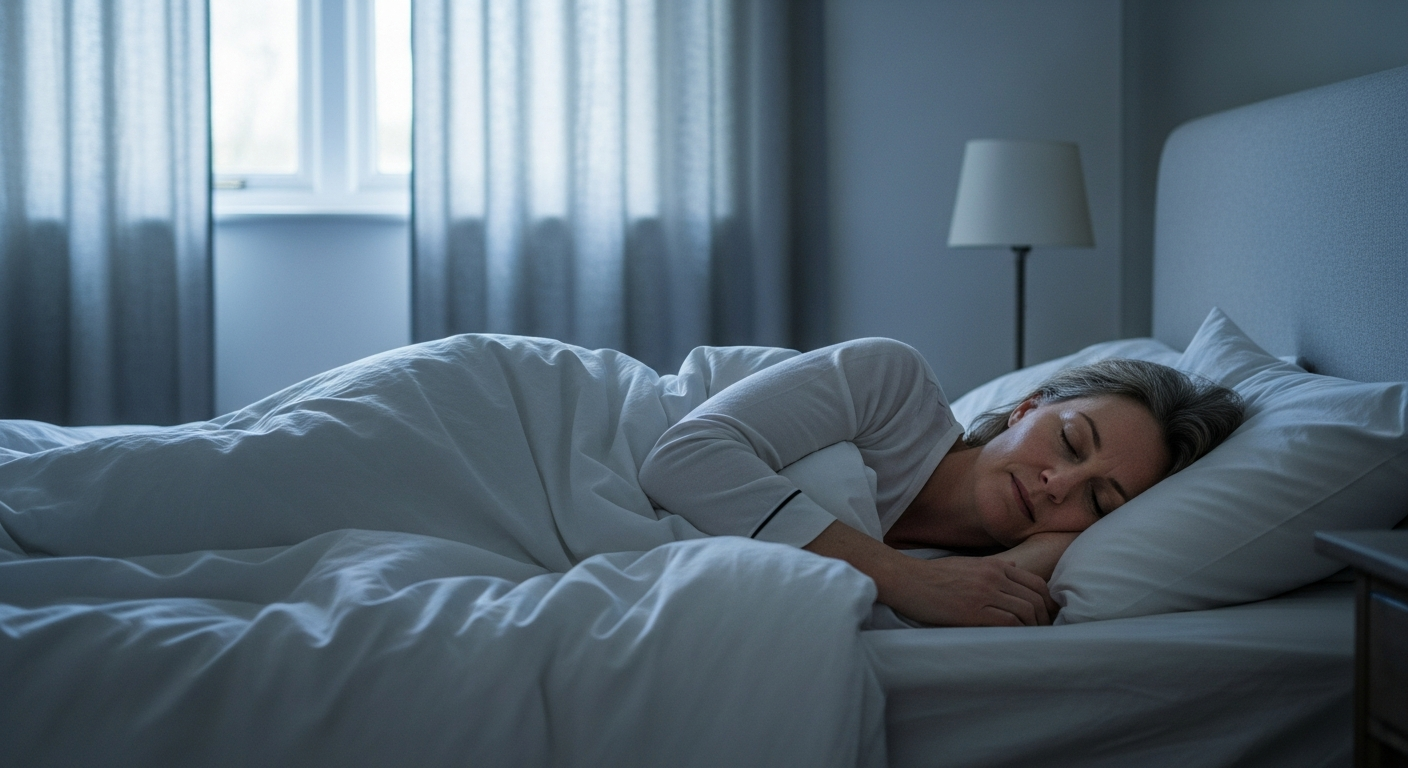
By the time you hit perimenopause, a partner’s snore or a car passing at 3am can land like someone flicking the bedroom light on in your face. Research published in the journal Menopause (January 2026) confirms what plenty of women already knew in their bones. Sleep disruption is one of the most common and most draining symptoms of menopause, and it turns up even when hot flushes don’t. A systematic review from the International Menopause Society (March 2026) goes a step further and links falling estrogen to a more reactive, more easily startled nervous system. That part rarely gets discussed. Your hormones aren’t only keeping you awake, they’re making you more sensitive to noise, and that sensitivity is what tips a rough night into a wrecked one. Noise, though, is the one thing on this list you can actually do something about tonight.
[/ux_text]This guide draws on the 2026 Menopause journal study and the International Menopause Society review, along with Bollsen’s own product testing and the experience of thousands of women managing disrupted sleep.
[/col] [/row] [/section] [section id=”product-1″ padding=”24px 0px 24px 0px” padding__sm=”16px 0px 16px 0px” bg_color=”rgb(245, 248, 255)”] [row v_align=”middle” h_align=”center”] [col span=”4″ span__sm=”12″ force_first=”small” align=”center”] [ux_image id=”4665″ image_size=”original” link=”https://bollsen-hearingprotection.com/product/life/” target=”_blank”] [/col] [col span=”8″ span__sm=”12″] [ux_text font_size=”1.1″]Bollsen Life+ Earplugs for Sleeping
★ Our Top Pick — Best for sensitive sleepers
Bollsen is a hearing protection specialist whose products are independently tested and certified in Germany. The Life+ is a reusable, medical-grade silicone earplug made for people who sleep on their side and still want to hear their alarm. It cuts the low-frequency rumble of snoring and traffic by a certified 24 dB, which is the exact band that ruins menopausal sleep, while letting high-frequency sounds like a smoke alarm come through.
[/ux_text] [block id=”2889″] [ux_text font_size=”1.02″]- Certified 24 dB noise reduction, independently tested by PZT GmbH in Germany (Notified Body 1974)
- Low-profile flush fit designed for side sleepers, no poking against the pillow
- Medical-grade silicone, reusable up to 100 times and washable
- Still lets you hear your alarm and smoke detector
- 40-day money-back guarantee, so you can test them across a full cycle of bad nights
- Takes a night or two to get the insertion technique right
Understand why menopause makes you sensitive to noise at night
Estrogen does far more than regulate your cycle. It helps shape how your brain processes sound and how readily your nervous system flips into alert mode. As levels fall through perimenopause and beyond, that filter wears thin. Sounds you used to sleep straight through, a snoring partner, a car door, the boiler firing up, now land harder and wake you properly. This is why so many women ask whether menopause makes you sensitive to noise. It does, and the research now matches what they’ve been living with. Knowing the mechanism matters because it points you at the fix. You can’t raise your estrogen back overnight, but you can take the trigger out of the room.
Track which sounds are actually waking you up
For three or four nights, keep a notepad by the bed and write down anything that pulls you out of sleep. Most women find the same culprits coming up over and over. A partner’s snoring usually tops the list, then traffic, neighbours, plumbing, and those small hours when the house is quiet enough that any little sound feels enormous. Once you can see the pattern, you stop treating poor sleep as a vague hormonal fog and start treating it as a handful of specific interruptions you can fix. Perimenopause insomnia and waking up at night feels far less hopeless when you’ve got a list of named triggers instead of one big cloud.
Control ambient noise before you reach for medication
Noise is the cheapest, highest-impact change you can make, and it’s the first thing worth sorting before you try anything more drastic. This is the step where the right pair of earplugs earns its place. Most people grab cheap foam plugs, expand them, and find they either fall out by 2am or muffle the alarm so badly they oversleep. Foam flattens every frequency equally too, which is why it feels like sleeping with your head in a bucket. A flat-filter silicone earplug works differently. The Bollsen Life+ uses a patented conical design (patent US D961,757) to cut the low-frequency snoring and traffic band by a certified 24 dB while keeping higher sounds like your alarm audible. It’s reusable, washable, and sits low enough to lie flush against the pillow, which makes it the practical choice for a problem you’ll be managing for years, not weeks.
[/ux_text] [/col] [/row] [/section] [section bg_color=”rgb(0, 36, 125)” padding=”24px 0px 24px 0px”] [row h_align=”center”] [col span__sm=”12″ align=”center”] [ux_text font_size=”1.05″]Ready to take noise out of the equation and sleep through the night again?
[/ux_text] [button text=”Try Risk-Free — 40-Day Guarantee” color=”secondary” style=”shade” size=”large” radius=”10″ link=”https://bollsen-hearingprotection.com/product/life/” target=”_blank”] [/col] [/row] [/section] [section padding=”30px 0px 10px 0px” padding__sm=”20px 0px 10px 0px”] [row h_align=”center”] [col span__sm=”12″] [ux_text font_size=”1.05″ line_height=”1.7″]Fit your earplugs properly so they stay in all night
Even the best earplug fails if you ram it in like foam. With the Life+, roll the soft lamellas gently, lift the top of your ear up and back to open the canal, and ease the plug in until it sits flush. It should feel sealed, not jammed. Give it two or three nights. The first night always feels odd because you aren’t used to the quiet, and that quiet is the whole point. By night three, most sensitive sleepers stop noticing the earplugs and start noticing how much they slept.
Stack noise control with the rest of your sleep routine
Controlling noise is the single biggest win. It still works better next to the basics. Keep the bedroom cool, since menopausal sleep is already touchy about temperature. Cut screens an hour before bed and hold your wake time steady, weekends included. If your partner’s snoring is the main offender, earplugs let you stay in the same bed instead of decamping to the spare room, which protects your sleep and the relationship at once. None of this replaces a conversation with your GP about menopause sleep disturbance. Noise is just the bit you can fix tonight while you sort out the rest.
Know when to involve your GP
If you’ve handled the noise, fixed your routine, and you’re still waking exhausted, that’s the point to book an appointment. Persistent postmenopausal sleep disturbance can have causes worth checking, from sleep apnoea to thyroid issues, and HRT helps some women a great deal. Earplugs solve the noise problem brilliantly. They don’t solve everything, and you deserve a proper look at the whole picture.
[/ux_text] [/col] [/row] [/section] [divider margin=”0px”] [section padding=”30px 0px 30px 0px” padding__sm=”20px 0px 20px 0px”] [row h_align=”center”] [col span__sm=”12″] [ux_text font_size=”1.05″ line_height=”1.7″]Frequently Asked Questions
Does menopause make you more sensitive to noise?
Yes. Falling estrogen changes how your brain processes sound and how easily your nervous system shifts into alert mode, so sounds you once slept through can now wake you fully. A 2026 International Menopause Society review ties this hormonal shift to a more reactive, more easily startled nervous system, which is why menopause sound sensitivity at night is so common.
Why am I waking up to every little sound during perimenopause?
Perimenopause wears down the filter that normally lets your brain ignore background noise while you sleep. Pair that with lighter, more broken sleep, and a snore, a car, or the boiler can pull you fully awake. It’s a real physiological change, not you being oversensitive or imagining things.
Can earplugs help with menopause sleep problems?
Noise is the one sleep trigger you can remove tonight, and earplugs are the most direct way to do it. They won’t fix hot flushes or hormonal causes, but by cutting the snoring and traffic that wake a primed menopausal brain, a good pair often makes the difference between a broken night and a full one.
Do earplugs let me still hear my alarm and smoke detector?
The right ones do. The Bollsen Life+ uses a flat-filter design that cuts low-frequency snoring and traffic by a certified 24 dB while letting higher-frequency sounds like alarms and smoke detectors come through. Cheap foam plugs muffle everything equally, which is exactly why people oversleep with them.
Are reusable silicone earplugs safe to wear every night?
Yes. Medical-grade silicone earplugs like the Life+ are washable, reusable up to around 100 times, and made for nightly wear, unlike disposable foam, which harbours bacteria and degrades fast. Keep them clean, swap them when they wear out, and they’re a much healthier nightly option than foam.
What else helps menopausal sleep besides controlling noise?
Keep the bedroom cool, hold a steady wake time, cut screens before bed, and talk to your GP about whether HRT is right for you. Noise control is the biggest change you can make on your own, and it works alongside all of the above rather than replacing any of it.
[/ux_text] [/col] [/row] [/section] [section bg_color=”rgb(245, 248, 255)” padding=”24px 0px 24px 0px” padding__sm=”16px 0px 16px 0px”] [row h_align=”center”] [col span__sm=”12″] [ux_text]