Ask three people whether your child can swim with grommets and you will get three different answers. The hospital leaflet says one thing, the ENT consultant says another, and the swimming teacher has a rule of her own. That inconsistency is real enough that researchers put it in the title of a 2026 British Journal of General Practice paper: “Can my child swim with grommets? Are we giving parents clear and consistent advice?” Their answer was no. Around 27.8% of parents said the advice they were given was unclear or inconsistent, and 27.9% were dissatisfied with it. This guide explains why the advice varies, what the evidence actually supports, and the practical routine that keeps water out of your child’s ears without banning them from the pool.
Researched by the team at UK Consumer Review using published NHS trust patient-information leaflets, UK paediatric ENT guidance, and independent certification data for the swimming earplugs on sale in Britain. This is general information. Always follow the specific instructions your child’s surgeon or ENT team gave you, because they know your child’s ears and we do not.
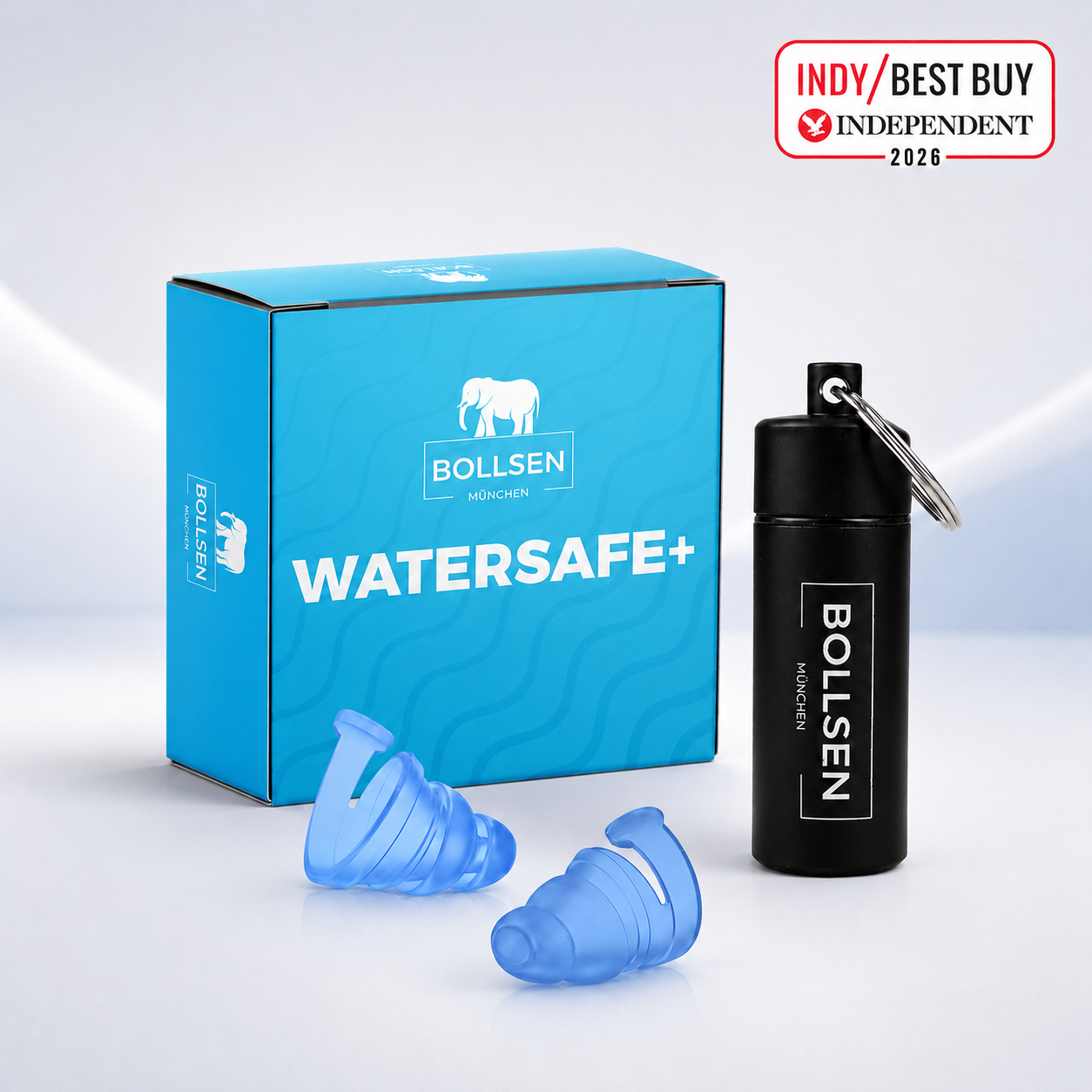
BOLLSEN Watersafe+ Swimming Earplugs
★ Our Top Pick — Best reusable seal for swimming with grommets
BOLLSEN is a hearing protection specialist whose products are independently tested and certified in Germany. The Watersafe+ is its dedicated swimming earplug: medical-grade silicone, a two-lamella flange that seals the ear canal, and a shape that holds during jumps and tumble turns rather than floating out on the first length. It is rated waterproof to 3 metres and reusable up to 100 times, so it replaces the cotton wool and Vaseline routine most parents are handed on discharge. For smaller ear canals, BOLLSEN also makes Kidz+, sized for ages 3 to 12, which most grommet patients will need instead of the adult fit. Earplugs are a water barrier, nothing more. They do not treat, prevent or cure an ear infection, and they are not a substitute for your ENT team’s advice.
BOLLSEN Watersafe+
£26.95
++ Today only: Free shipping to the UK / EU ++
www.bollsen-hearingprotection.com
- Waterproof to 3 m, so surface swimming and shallow pool play are covered
- Two-lamella silicone seal stays put during dynamic movement
- Medical-grade silicone: BPA-free, PVC-free, latex-free
- Reusable up to 100 times and washable, unlike cotton wool
- 40-day money-back guarantee
- Adult sizing; children aged 3 to 12 usually need the Kidz+ version
- Not a replacement for custom audiology moulds if your consultant has specified them
1. Understand Why “Can My Child Swim With Grommets?” Gets Different Answers
You are not imagining the contradictions. Compare a few NHS trust leaflets side by side and they diverge on the two questions parents care about most: whether earplugs are needed at all, and how deep a child can go.
Bedfordshire Hospitals tells parents that after two weeks, children can swim without ear protection. Milton Keynes University Hospital takes a firmer line on plugs and on diving depth. Private paediatric ENT clinics tend to sit somewhere in between, often saying head-under swimming is fine as long as earplugs and a headband are worn. None of these sources is being careless. They are all reading the same modest evidence base and weighting the risk differently.
That is the gap the 2026 BJGP paper points at. When advice is inconsistent, parents fill the space with worry or with whatever the last person told them, which is exactly why “can my child swim with grommets” ends up on Mumsnet instead of being settled at the follow-up appointment.
The evidence itself is less divided than the leaflets suggest. Surface swimming in clean, treated water is low risk for most children with grommets. What raises the risk is depth, because pressure pushes water through the tube, and soapy water, because detergent lowers surface tension and lets water pass a barrier that plain water would not. A conservative, practical routine matters more than a blanket yes or no. If your surgeon gave you specific instructions, those win over anything you read here.
2. Wait Two Weeks After Surgery Before Your Child Gets Back in the Water
Most UK ENT departments ask for a two-week gap between grommet insertion and the first swim. The tube needs to settle, and any post-operative discharge needs to have stopped.
Two weeks is the common figure, but some units say three, and a few clear children at the first follow-up rather than by the calendar. Check your discharge letter. If it does not say, ring the ENT nurse specialist rather than guessing, because that phone call takes two minutes and saves a fortnight of second-guessing.
One rule holds everywhere: if the ear is running, swimming stops. Discharge means the ear needs reviewing, not rinsing.
3. Choose Earplugs That Actually Seal Instead of Cotton Wool and Vaseline
Cotton wool smeared with Vaseline is still the default suggestion on many discharge sheets. It is cheap and it is better than nothing, but ask any parent who has tried it in a busy leisure centre changing room. It is messy, it works loose, and you cannot tell whether the seal held until your child is already out of the pool.
Silicone swimming earplugs solve the same problem more reliably. A flanged silicone plug forms a physical barrier against the canal wall and keeps its shape wet or dry, which cotton wool cannot do once it soaks. The BOLLSEN Watersafe+ uses a two-lamella design, meaning two sealing ridges rather than one, so if the outer ridge is disturbed by a jump or a tumble turn the inner one is still holding. It is rated waterproof to 3 metres and made from medical-grade silicone. It is also washable and reusable up to 100 times, so it lasts a full season of lessons rather than a single swim.
Fit is what makes or breaks any earplug, and children’s canals are narrow. Kidz+ is the version sized for ages 3 to 12 and uses the same medical-grade silicone in a smaller profile. If your child is older or has larger canals, the standard Watersafe+ is the right pick.
The third option is custom-moulded plugs taken from an impression of your child’s ear. They fit beautifully and they last, but in the UK they usually mean a referral to audiology, a wait, and sometimes a charge. Plenty of families are told to ask and never get round to it. An off-the-shelf silicone plug used consistently beats a perfect custom plug you are still waiting for.
Whatever you buy, do a dry run at bath time before the first lesson. Your child should notice sound dropping away as the plug seats. If they can still hear the tap clearly, it is not in properly.
Want the earplug our testers found hardest to dislodge in the water? Start here.
4. Add a Swimming Headband to Hold the Plugs Where You Put Them
Almost every credible source on grommets and swimming recommends the same pairing: earplugs plus a neoprene swimming headband. The plug does the sealing. The band stops the plug being knocked out by a splash, a diving-brick retrieval, or another child’s elbow.
A grommet swimming headband is a wide neoprene strip that sits over the ears and fastens at the back of the head. They cost a few pounds, come in children’s sizes, and are sold in most swim shops and online. They also give you a visual check from the poolside, since you can see at a glance whether the band has ridden up.
Skip the swim cap as an ear-protection strategy. Caps are made to keep hair out of the way and they do nothing to keep water out of an ear canal.
5. Treat Bath Time and Hair Washing More Carefully than the Pool
This surprises most parents. Bathwater is usually the bigger risk, not pool water.
Shampoo and bubble bath contain surfactants, which reduce the surface tension of water. Plain water tends to bead at the entrance to the ear canal and stay out. Soapy water spreads and can travel down and through a grommet in a way plain water often will not. Add the fact that children lie back in the bath with their ears fully submerged, and bath time becomes the main daily exposure.
The routine that works: keep the water level below ear height, wash hair with a jug or a shower attachment while your child tilts their head back, and avoid submerging the ears in soapy water altogether. Some families use earplugs for hair washing too, which is entirely reasonable if your child tolerates them.
Showers are simpler. A shower with the head upright poses very little risk, since water runs down the outside of the ear rather than pooling in the canal.
6. Set Clear Limits on Diving, Depth and Open Water
Depth is where the caution is genuinely evidence-based. Water pressure increases as your child goes deeper, and pressure is what forces water through the small opening in a grommet. Surface swimming barely generates any. Diving to the bottom of the deep end generates a lot more.
A sensible limit for most children with grommets is surface swimming and shallow underwater play with plugs in, and no deep diving, no jumping from height, and no diving boards until the grommets have come out. Trust ranges differ, and some leaflets give a specific depth figure. Follow the number your hospital gave you if you have one.
Open water needs a bit more thought. Lakes, rivers and lidos are not treated the same way a pool is, and bacterial loads run higher, so a good seal matters more rather than less. Sea water is generally kinder to ears than fresh water, though the same depth rules apply. Use plugs and a headband, keep it to surface swimming, and dry the ears properly afterwards.
If you want help choosing between the children’s swimming earplugs sold in the UK, our full comparison of swimming ear plugs for kids goes through the options in detail.
7. Know What a Running Ear Means and When to Ring the GP
The complication to watch for is otorrhoea, a discharge from the ear. It shows up as fluid on the pillow, a crust around the ear, or a smell. Some children get a mild ache with it, and some report nothing at all.
Grommets can discharge for reasons that have nothing to do with swimming, including a common cold. But if it starts after a swim, stop swimming and book a GP appointment. Most cases clear with antibiotic ear drops. The reason to move quickly is that a persistently discharging ear can block the grommet or need further review, and neither is a problem you want to let run.
Do not put anything in the ear to clean it out. No cotton buds, no olive oil, no home remedies. Wipe the outer ear, keep it dry, and let the GP look.
Once the ear has been clear for the period your GP specifies, normal swimming with plugs can resume. And when the grommets eventually fall out on their own, usually within six to twelve months, most children can go back to swimming with no restrictions once the eardrum has been confirmed as healed.
Frequently Asked Questions
How long after grommets can my child swim?
Most UK ENT departments advise waiting two weeks after grommet insertion before swimming, though some units say three weeks and others clear children at the first follow-up appointment. Check your discharge letter, and if it does not specify, ring the ENT nurse specialist. Do not swim while the ear is discharging, whatever the calendar says.
Can my child go underwater or dive with grommets?
Surface swimming and shallow underwater play are generally considered low risk with earplugs in. Deep diving is different, because water pressure increases with depth and can force water through the grommet. Most guidance advises against diving boards, jumping from height, and swimming at depth until the grommets have come out. If your hospital gave you a specific depth limit, follow it.
Do children definitely need earplugs for swimming with grommets?
This is exactly where the advice splits. Some NHS trusts say ear protection is not required after the initial healing period, while others and most private ENT clinics recommend earplugs for every swim. Earplugs are the conservative choice and carry no downside beyond the cost, which is why most parents use them. Your surgeon’s instruction for your child’s ears takes priority.
Is bathwater or shampoo worse for grommets than pool water?
Often, yes. Shampoo and bubble bath contain surfactants that lower the surface tension of water, letting it pass into the ear canal more readily than plain water does. Children also submerge their ears in the bath more thoroughly than they do in a pool. Keep the water below ear height, wash hair with a jug while the head is tilted back, and consider earplugs for hair washing.
Is cotton wool and Vaseline enough instead of earplugs?
It is the traditional suggestion and it is better than no barrier at all, but it seals unreliably, works loose in the water, and is messy to apply. Silicone swimming earplugs create a consistent physical barrier, keep their shape when wet, and are reusable. If cotton wool is what you have to hand for a one-off bath, use it. For regular swimming lessons, proper plugs are far more practical.
Do earplugs need a swimming headband to stay in?
A well-fitted earplug will stay in during normal swimming, but a neoprene headband is cheap insurance and nearly every credible source recommends the pairing. The band stops a plug being dislodged by a splash or a knock, and it lets you check from the poolside that everything is still in place. A swim cap is not a substitute, since caps do nothing to keep water out of the ear canal.
Can my child swim in the sea, a lake or a lido with grommets?
Yes, with a good seal and sensible limits. Untreated water carries higher bacterial loads than a chlorinated pool, so a reliable earplug and a headband matter more in open water, not less. Stick to surface swimming, skip the diving, and dry the outer ears properly afterwards. Sea water tends to be gentler on ears than fresh water, though the depth rules are the same.
What should I do if my child’s ear starts running after swimming?
Stop swimming and book a GP appointment. Discharge from the ear, known as otorrhoea, usually responds well to antibiotic ear drops when treated early. Do not put cotton buds, olive oil or any home remedy into the ear. Wipe the outer ear only, keep it dry, and let the GP examine it before returning to the water.
Do I need a referral for custom-moulded swimming plugs?
In the UK, custom moulds are usually made by an audiology department and typically need a referral from your GP or ENT consultant, with a wait and sometimes a charge. They fit precisely and last well. But an off-the-shelf silicone plug used at every swim protects your child today, which a custom mould you are still waiting for does not.