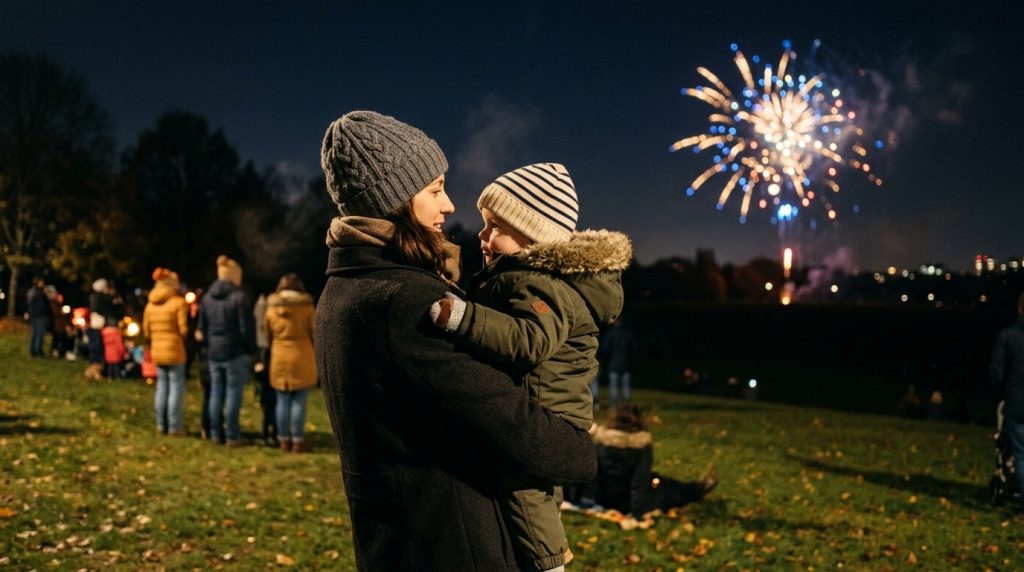
A firework bursting three feet away hits around 150 to 160 decibels. That is louder than a jet engine at take-off, and a single blast at that range can damage a young child’s hearing in an instant. If you have been searching how to protect children’s ears from fireworks before Bonfire Night, you are already thinking about the right thing. Below we cover how loud fireworks really get, how far back to stand, and which type of protection suits your child’s age.
This guide draws on WHO noise-exposure guidance, UK fireworks-safety advice, and the certification data behind children’s hearing protection.
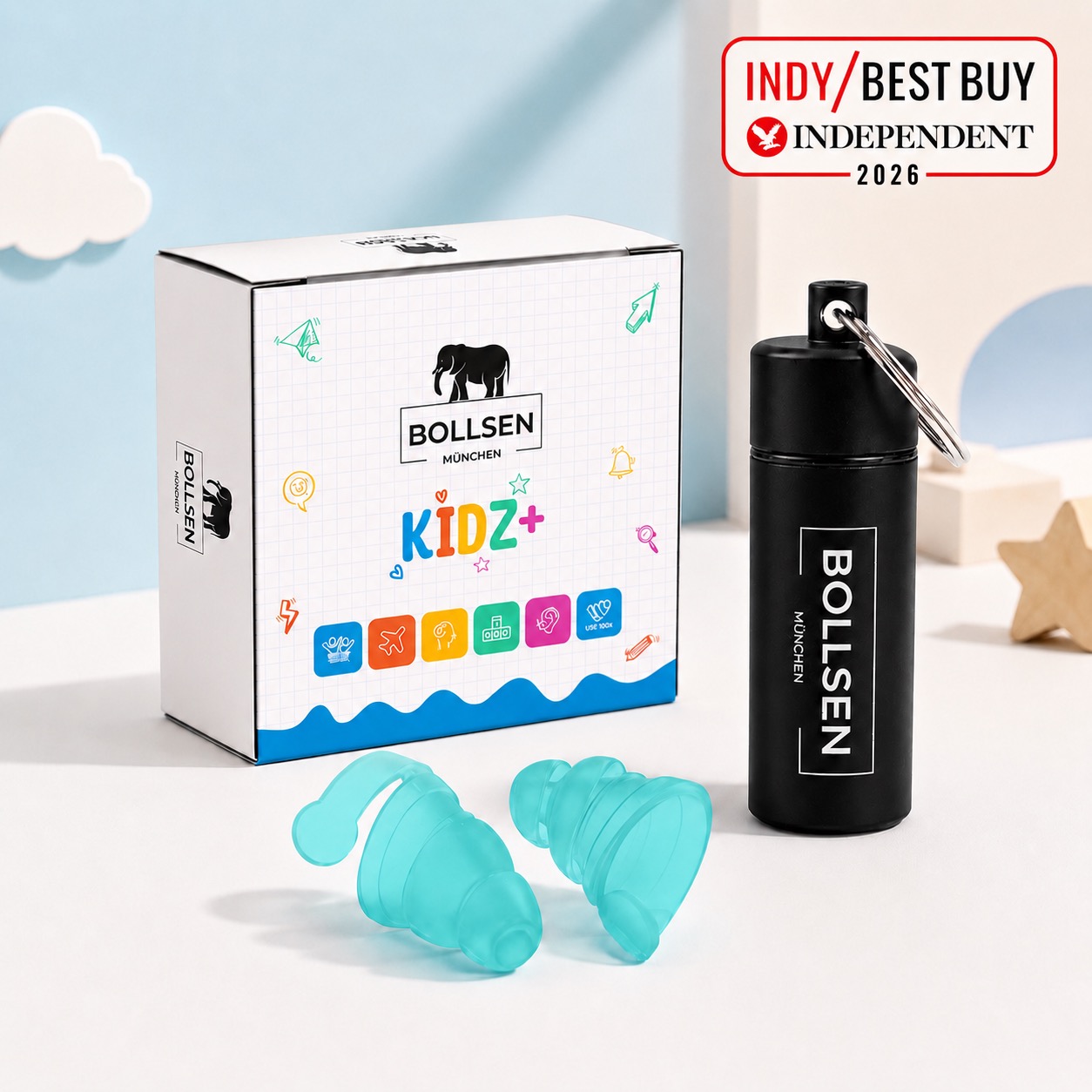
BOLLSEN Kidz+ Children’s Earplugs
★ Our Top Pick — Best for ages 3–12 · fireworks & events
BOLLSEN is a hearing protection specialist whose products are independently tested and certified in Germany. Kidz+ is made from soft, medical-grade silicone shaped for smaller ear canals and sized for ages three to twelve. Its flat-filter design lowers the overall volume without muffling everything, so your child can still hear your voice while the bangs are brought down to a safer level.
BOLLSEN Kidz+
£26.95
++ Today only: Free shipping to the UK / EU ++
www.bollsen-hearingprotection.com
- Independently tested and certified in Germany (PZT GmbH, Notified Body 1974)
- Soft, medical-grade silicone sized for smaller ear canals, ages 3 to 12
- Flat-filter design lowers the volume so your child still hears your voice
- Reusable up to 100 times, washable, with a travel case
- Backed by a 40-day money-back guarantee
- Not suitable for babies or children under 3 (use over-ear defenders instead)
- Needs the correct size to seal properly, so try before the night
1. Know how loud fireworks really are before the night
Sound is measured in decibels, and the scale is not linear. Normal conversation sits around 60 dB. A firework going off close by reaches 150 to 160 dB, and some large shells peak higher still. Hearing damage can begin above 85 dB, and the World Health Organization puts the peak sound a child should ever be exposed to at around 120 dB. A single close blast crosses that line. Children are more vulnerable than adults because their ear canals are smaller, which raises the sound pressure reaching the eardrum.
2. Match the ear protection to your child’s age
The right protection depends on how old your child is. For babies and toddlers under three, over-ear defenders (padded earmuffs) are the safer choice. Earplugs are a choking hazard for this age group, and defenders cover more of the ear as well. From around age three upwards, many children can wear properly sized earplugs, which are lighter and less likely to be pulled off. That is where certified child-sized earplugs like BOLLSEN Kidz+ come in, shaped for smaller ears and tested to lower the volume without shutting the world out completely. If your little one is still a baby or toddler, stick with defenders for now and keep earplugs for when they are older.
3. Put real distance between your child and the launch site
Distance is the simplest and most powerful tool you have. Sound pressure drops quickly as you move away from the source, so where you stand matters as much as what your child wears. At a public display, aim to be at least 50 to 60 metres back from the firing area with children, and further if you can. At a small back-garden gathering, keep little ones indoors or well away while fireworks are set off. Watching from a window or a distant spot is a perfectly good option for a nervous or very young child.
4. Fit and test the ear protection before you leave home
Protection only works if it fits and stays in. Try earplugs or defenders on your child at home, in a calm moment, a few days before the event. Check that earplugs sit snugly and seal the canal, and that defenders form a full cushion around the ear with no gaps under glasses or a hat. Let your child wear them for a few minutes so the sensation feels familiar rather than strange on the night. A quick practice run also tells you whether you have the right size.
5. Prepare a noise-sensitive or neurodivergent child in advance
Some children find fireworks night genuinely overwhelming, including many autistic and noise-sensitive children. Preparation makes a real difference. Talk through what will happen using photos or a short video with the sound turned low, so the flashes and bangs are not a surprise. Plan a calm base to retreat to, whether that is the car or a quiet spot at the edge of the crowd. Bring familiar comfort items, and let your child keep some control by choosing when to watch and when to step away. Ear protection helps here too, taking the sharp edge off the sound so the evening stays manageable.
6. Have a calm exit plan and comfort items ready
Even with the best preparation, plans change, and that is fine. Agree a simple signal your child can use when they have had enough. Keep snacks, water, and something warm within reach, since cold and hunger make sensory overload worse. Knowing you can leave at any moment takes the pressure off, and often means your child relaxes enough to enjoy more of the display than you expected.
Getting your child ready for Bonfire Night? Certified, child-sized ear protection is a small step that makes the whole evening easier.
Frequently Asked Questions
How loud are fireworks in decibels?
Close-range fireworks reach around 150 to 160 decibels, with some large shells peaking higher. That is louder than a jet engine at take-off. Hearing damage can begin above 85 dB, and the World Health Organization advises that a child should never be exposed to peaks above roughly 120 dB, which a single close blast can exceed.
Do children need ear protection for fireworks?
Yes, especially at close or mid range. Children’s ears are more sensitive than adults’, and the loud, sudden peaks at a display can damage hearing quickly. Ear defenders or certified earplugs, paired with sensible distance, bring the exposure down to a safer level.
What age can a child wear earplugs instead of ear defenders?
As a general rule, over-ear defenders are best for babies and children under three, because earplugs are a choking hazard at that age. From around three upwards, many children can wear properly sized earplugs such as Kidz+, which are lighter and sit more discreetly than muffs. Always choose a child-specific size.
Can babies go to firework displays?
Many audiologists suggest waiting until a baby is at least six months old, and then only with over-ear defenders and from a good distance. A baby’s hearing is delicate, so watching from far back, or from indoors, is the safest way to include the youngest members of the family.
How far away should you stand from fireworks with a child?
Keep at least 50 to 60 metres between children and the firing area at a public display, and more if the space allows. At home, keep young children indoors or well back while fireworks are lit. The further away you are, the lower the sound pressure reaching your child’s ears.
How do I help an autistic or noise-sensitive child cope with fireworks night?
Prepare in advance. Show them what to expect with photos or quiet video clips, plan a calm space to retreat to, and bring comfort items. Certified ear protection softens the sharp peaks, and letting your child decide when to watch and when to step back gives them a sense of control.