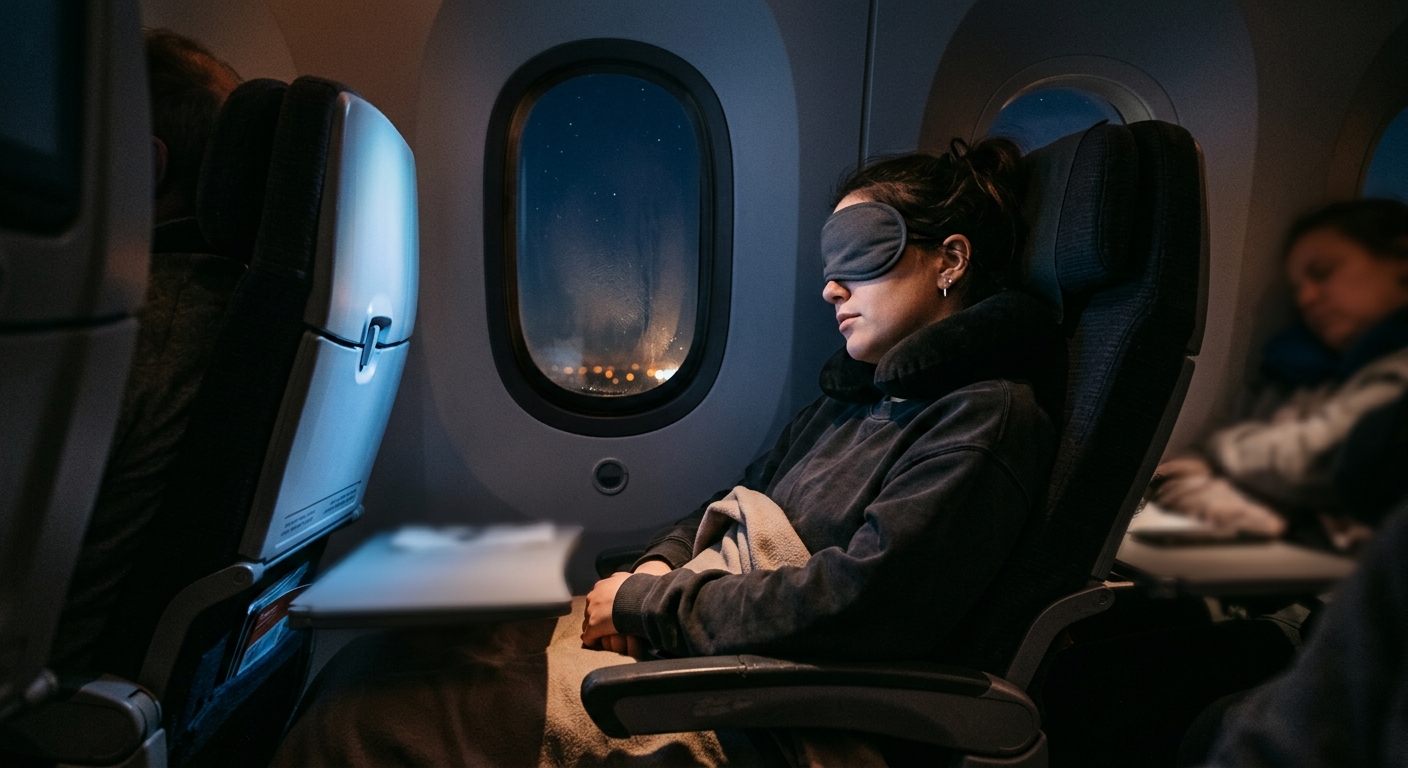
A cruising aircraft cabin sits at roughly 75 to 85 decibels for the whole flight. That is about what you get standing next to heavy traffic, except on a long-haul route you live inside it for eight, ten, sometimes fourteen hours. Your brain reads that steady engine drone as something it has to keep half an ear on. So you doze off, jerk awake, doze off again, and land feeling like you never really slept. Figuring out how to sleep on a long-haul flight comes down to two things: quieting that noise, and giving your body the signals it needs to switch off. Here is what actually works, in the order to do it.
Researched against published cabin-noise measurements, current acoustic guidance, and hands-on testing of sleep earplugs and masks over multiple long-haul routes.
[/ux_text] [/col] [/row] [/section] [section id=”product-1″ padding=”24px 0px 24px 0px” padding__sm=”16px 0px 16px 0px” bg_color=”rgb(245, 248, 255)”] [row v_align=”middle” h_align=”center”] [col span=”4″ span__sm=”12″ force_first=”small” align=”center”] [ux_image id=”4790″ image_size=”original” link=”https://bollsen-hearingprotection.com/product/life/” target=”_blank”] [/col] [col span=”8″ span__sm=”12″] [ux_text font_size=”1.1″]BOLLSEN Life+ Earplugs
★ Our Top Pick — Best for long-haul cabin noise and side-leaning sleepers
BOLLSEN is a hearing protection specialist, and its products are independently tested and certified in Germany. The Life+ is a reusable plug made from medical-grade silicone with a patented conical shape that sits flush in the ear, so it does not poke when you lean your head against the window or a travel pillow. It is certified to cut 24 dB of noise. Because it filters rather than just muffles, it knocks down the low-frequency engine drone while still letting through higher-pitched sounds, like a crew announcement or the person next to you.
[/ux_text] [block id=”2889″] [ux_text font_size=”1.02″]- Independently tested and certified in Germany to reduce 24 dB, ideal for steady cabin drone
- Low-profile flush fit that stays comfortable for a full ten-hour flight, even leaning sideways
- Filters low-frequency noise but still passes alarms and announcements
- Reusable up to 100 times, washable, with a compact travel case that lives in your carry-on
- Backed by a 40-day money-back guarantee
- Costs more upfront than a bag of disposable foam, though it works out far cheaper per use
1. Understand what is actually keeping you awake at altitude
The biggest sleep thief on a plane is not the cramped seat or the dry air. It is the constant low-frequency roar of the engines and airflow, holding at around 75 to 85 dB for the whole cruise. That is loud enough to fragment your sleep without ever properly waking you. You drift through the shallow stages all night and never drop into the deep sleep that actually leaves you rested.
The second thief is light. Cabin lighting, a neighbour’s reading lamp, the glow off a dozen seat-back screens. All of it tells your brain it is still daytime and holds back the melatonin you need to nod off. Deal with noise and light and you have handled most of what stands between you and real rest. Everything else here builds on those two.
2. Block the engine drone with earplugs built for steady noise
This is the step that makes the biggest difference, which is why it comes early. The goal is to pull that 75 to 85 dB drone down to a level where your brain stops monitoring it. Cheap foam plugs muffle some of it, sure, but they expand unevenly, work loose over a long flight, and flatten the higher frequencies so hard you miss announcements altogether. A flat-filter silicone plug copes with a long-haul flight far better. It holds its fit for hours, it is comfortable to leave in the whole way, and it lowers the roar while still letting enough through that you hear the crew.
This is where the BOLLSEN Life+ earns its place at the top of the guide. The certified 24 dB reduction is aimed at exactly the kind of steady, droning noise a cabin throws out, and the flush conical shape lets you rest your head against the window without a plug digging into your ear. Foam cannot do that. Over a ten-hour flight, a plug you forget you are wearing is the one that lets you sleep. A plug you keep readjusting is not.
3. Cut out the light with a proper sleep mask
With the noise handled, light is next. A good sleep mask is the simplest, cheapest upgrade to your in-flight rest, and it works hand in hand with earplugs because between them they cover the two main problems. Skip the flimsy freebie the airline hands out. It slips off and lets light leak in around the nose. A contoured or silk mask that blocks light properly, like the BOLLSEN Deep Sleep Mask, tells your body it is night and lets melatonin get on with its job.
Put earplugs and a mask together and you have your own pocket of dark and quiet in seat 34K. It is about as close as you will get to your own bedroom at 38,000 feet, and everything else rests on it.
4. Pick your seat and set up your space for sleep
Where you sit shapes how well you sleep. A window seat is the side sleeper’s friend. You get something solid to lean against, and nobody clambers over you for the toilet. Steer clear of the back row by the galley and the seats near the lavatories, where foot traffic and clattering carts carry on all night. If you can, pick your seat when you book rather than leaving it to chance.
Get yourself set up properly once you are aboard. A decent neck pillow stops your head lolling and waking you. A light layer keeps you warm when the cabin cools mid-flight. Loosen your shoelaces or slip on compression socks to keep your legs comfortable. Recline the moment the seatbelt sign goes off, and try to claim your bit of space before the person in front reclines into it.
5. Time your sleep to your destination, not your departure
Jet lag is your body clock arguing with the local time where you are landing. You can take the edge off that argument before you even take off. Work out what time it will be at your destination and try to sleep during what counts as night there, even if it feels like mid-afternoon back home. Overnight eastbound flight? Sleep early. Daytime westbound? You may be better off staying awake and pushing through.
Light is your strongest tool here. Use your mask to make darkness when you want to sleep. Once you have rested, open the window or wander toward a lit galley to tell your body it is daytime at the destination. Handle light and dark on purpose and you arrive ready to function rather than wrecked.
6. Skip the alcohol and time your caffeine and meals
A pre-flight drink feels like it helps. It doesn’t. Alcohol fragments your sleep and dehydrates you in an already bone-dry cabin, so you wake up groggy and worse off. Give it a miss. Caffeine is the other obvious trap. Stop several hours before you plan to sleep, because at altitude it lingers and keeps your nervous system humming when you want it winding down.
Eat with your sleep plan in mind too. A heavy meal right before you want to drop off keeps your digestion working overtime, so eat earlier or lighter if you can. And drink plenty of water across the flight. It does more for how you feel on arrival than almost anything off the trolley.
7. Build a wind-down routine you can do in your seat
Your body falls asleep on cues, and you can rebuild your bedtime routine even strapped into an economy seat. Brush your teeth in the lavatory. Change into something loose. Put your earplugs and mask on at the point you would normally switch off the bedroom light. That bit of repetition tells your brain it is time to shut down.
Then slow everything down. Put the screen away well before you want to sleep, breathe slowly, and resist checking the flight map every twenty minutes. The more you treat the flight like an ordinary night rather than something to endure, the easier sleep comes. Get the noise down, the light gone, and your body told it is bedtime, and a long-haul flight stops being something you survive. It becomes somewhere you can actually rest.
[/ux_text] [/col] [/row] [/section] [section bg_color=”rgb(0, 36, 125)” padding=”24px 0px 24px 0px”] [row h_align=”center”] [col span__sm=”12″ align=”center”] [ux_text font_size=”1.05″]Ready to silence the engine drone and finally sleep across the Atlantic?
[/ux_text] [button text=”Try Risk-Free — 40-Day Guarantee” color=”secondary” style=”shade” size=”large” radius=”10″ link=”https://bollsen-hearingprotection.com/product/life/” target=”_blank”] [/col] [/row] [/section] [divider margin=”0px”] [section id=”product-2″ padding=”24px 0px 24px 0px” padding__sm=”16px 0px 16px 0px”] [row v_align=”middle” h_align=”center”] [col span=”3″ span__sm=”12″ force_first=”small” align=”center”] [ux_image id=”4791″ image_size=”original” link=”https://bollsen-hearingprotection.com/product/deep-sleep-mask/” target=”_blank”] [/col] [col span=”9″ span__sm=”12″] [ux_text font_size=”1.05″]BOLLSEN Deep Sleep Mask
The natural pairing — blocks the light your earplugs cannot
Earplugs handle the noise. This handles the light. Made from 100% natural mulberry silk, the Deep Sleep Mask blocks light completely and sits softly against the skin, so it stays put when you lean against the window and does not gap around the nose the way airline freebies do. The silk is temperature-regulating and washable, which counts for a lot on a long flight where the cabin runs warm then cold. Pair it with the Life+ and you have your own dark, quiet pocket of night in the middle of a busy cabin.
- Blocks 100% of light, no gaps around the nose
- Natural mulberry silk, gentle on skin and temperature-regulating
- Adjustable strap and washable, packs flat into your carry-on
- A premium pick rather than the cheapest mask on the shelf
Frequently Asked Questions
How loud is an aeroplane cabin?
During cruise, a typical cabin sits at roughly 75 to 85 decibels, about the same as standing beside heavy traffic. The trouble is how long it lasts. On a long-haul flight you get that steady drone for eight to fourteen hours, which is more than enough to fragment your sleep even when it never properly wakes you.
Do earplugs really help you sleep on a plane?
Yes, and for most people it is the single most effective change they can make. Bringing the engine drone down by 20-plus decibels stops your brain monitoring the noise and lets you settle into deeper sleep. A certified filtering plug like the Life+ lowers the roar while still passing alarms and crew announcements, so you are not cut off from what is going on around you.
Are foam or silicone earplugs better for flying?
For a long flight, flat-filter silicone wins. Foam muffles unevenly, works loose over the hours, and flattens higher frequencies so heavily you can miss announcements. A medical-grade silicone plug holds its fit, stays comfortable the whole flight, and lowers noise more evenly while still letting you hear what matters.
Should I use earplugs or noise-cancelling headphones on a long flight?
Noise-cancelling headphones are great for steady drone, but they are bulky to sleep in, especially if you lean sideways, and the battery can die mid-flight. Earplugs are tiny, need no charging, and sit flush so you can rest your head against the window. Plenty of travellers use headphones while they are awake and switch to earplugs the moment they want to sleep.
Can you wear earplugs for the whole flight?
With the right plugs, yes. Cheap foam gets uncomfortable and starts to itch over long stretches, but reusable medical-grade silicone is made to stay in comfortably for hours. The Life+ is built for exactly this kind of extended wear, with a low-profile shape that does not press on the ear when you lie against a pillow or window.
Will earplugs stop me hearing the cabin crew or announcements?
Not with a filtering plug. Foam blocks sound fairly indiscriminately, but the Life+ is designed to cut low-frequency noise like the engine drone while still passing higher-frequency sounds. You will still hear an announcement, an alarm, or someone speaking to you, just without the constant roar underneath it.
[/ux_text] [/col] [/row] [/section] [section bg_color=”rgb(245, 248, 255)” padding=”24px 0px 24px 0px” padding__sm=”16px 0px 16px 0px”] [row h_align=”center”] [col span__sm=”12″] [ux_text]